
In Defense of the Solar Oven (Yes, Really)
A few years ago, I wrote K–8 science curriculum for a renewable energy company. I still remember their onboarding meeting vividly, because the very first thing they told us was this:
"We don't want solar ovens as a lesson. It's overplayed and not relevant."
They were the paying customer, so I obliged. And honestly? Once I started digging into how much solar oven content already exists out there, I could see their point. Search "solar energy lesson for kids" and you'll be buried in pizza-box ovens before you can say photovoltaic.
But here's the thing.
Now that I'm back in my own classroom, I LOVE ME a good solar oven lesson.
Hear me out.
Overplayed Isn't the Same as Outdated
There's a difference between a lesson that's been done a lot and a lesson that's lost its value. Solar ovens show up everywhere because they work. In one hands-on project, kids get to see energy transfer, reflection, absorption, insulation, and the greenhouse effect actually happen, not just read about it in a diagram.
And there's one more reason my students love it that no curriculum company can argue with:
They get to eat something at the end.
A s'more is a powerful motivator. Never underestimate it.
How I Run It: Three Lessons, One Delicious Payoff
Lesson 1: Watch, Take Notes, Think Like an Engineer
We start by watching a video on how to build a solar oven. Students take notes as they watch, and then we talk through it together. What are the design challenges? What would make an oven actually work instead of just looking like one? Why foil here? Why plastic wrap there? Why does the color of the inside matter?
This is where the science thinking starts. Before anyone touches a piece of cardboard, they're already making predictions.
Lesson 2: Build It, Together
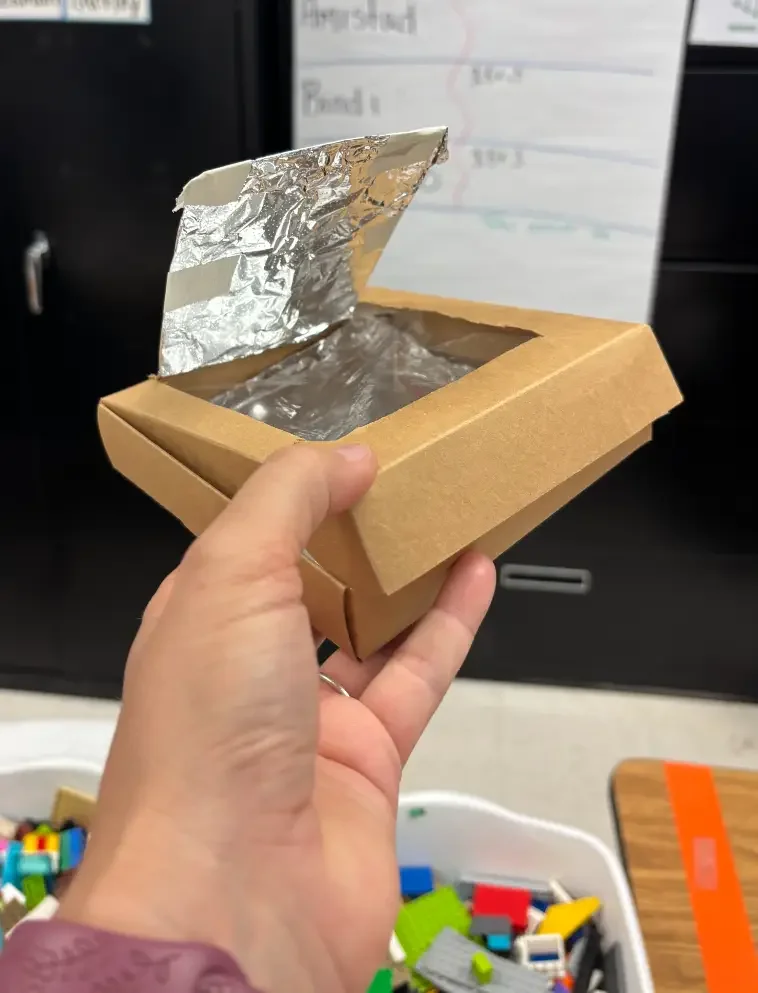
Next, we build. I put out an example oven, students have their notes, and every student creates their own solar oven.
But here's the twist: they have to work as a team to do it.
Even though each kid walks away with their own oven, the group's job is to make sure everyone understands every step. Nobody gets left behind with a soggy flap and no idea what went wrong. This is where we talk about collaboration, communication, and working toward a common goal. Those aren't "extra" skills tacked onto a science lesson. They're how real science and engineering happen.
Lesson 3: We EAT
This is, without question, their favorite part.
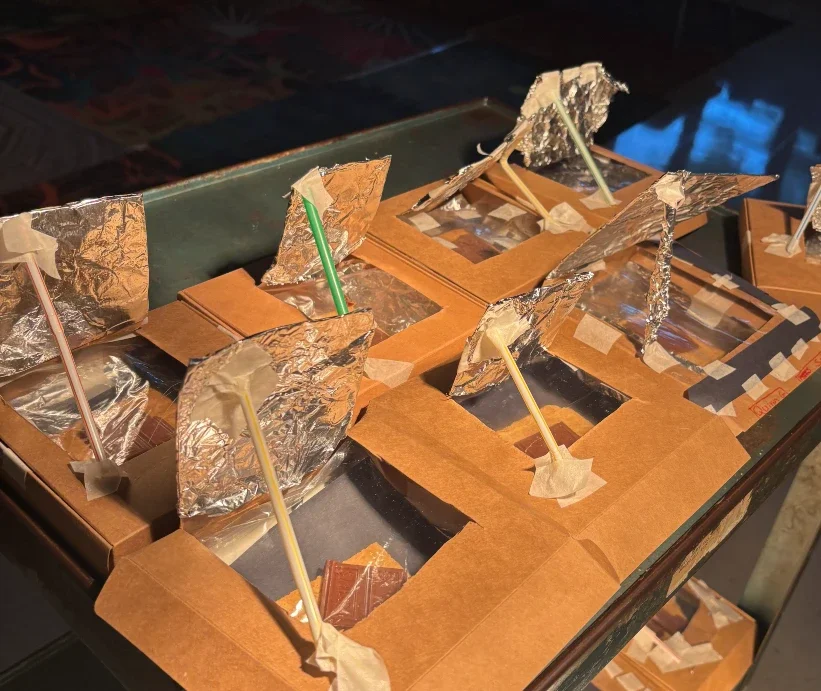
I get to school super early and load each student's oven with graham crackers and chocolate. Then I set them under heat lamps and let them "cook."
(Confession: I did try the real sun. But my students come to me for specials early in the morning, and that early sun just doesn't have the power to produce any REAL melting. Heat lamps keep the experiment consistent, and they open up a great conversation about why the time of day matters for solar energy.)
When students walk in, we have a great discussion about what worked and what didn't. Whose chocolate melted the most? What was different about that oven? What would you change next time?
Then they eat.
The Ripple Effect
Here's the part I never expected: this lesson doesn't stay in my classroom.
The office staff loves solar oven week. Each day, I send extra s'mores up to the front office, and the kids love delivering them. They get to share what they built and explain how it works to adults in the building. That's science communication in action, and the confidence it builds is real.
And over the years, something sweet has happened. My younger grades now look forward to this lesson. They walk past and see the s'mores "cooking" day after day, and they know their turn is coming. The anticipation alone has become part of the learning.
So, Was the Curriculum Company Wrong?
Not exactly. If you're building a brand-new curriculum and want to stand out, I understand not wanting to lead with the lesson everyone has already seen.
But in a real classroom, with real kids, "overplayed" matters a lot less than engaging, hands-on, and memorable. A great lesson isn't one nobody has ever taught. It's one that gets students thinking like scientists, working like a team, and talking about it long after it's over.
The solar oven does all of that.
Plus, s'mores.
I rest my case.
Want to Learn More?
Take a look at some of my other blogs about sustainability!
